Your luck was never stolen. It was held against a karmic debt you never owed. A 92-year-old monk has spent his life learning how to turn one.
The monk the money desks came to see reveals the invisible "karmic debt" that quietly collects on kind women after fifty, and the old teaching that can turn it before it collects from you again
You are not imagining it. Your money really has been stopping a few streets short of your door. It is not your age, and it is not you. It does not leave in one theft. It leaves like flour a mouse has found: a pinch a night, and the sack still looks full. An old Tibetan teaching says it is held, not lost, against a karmic debt that has fed for years, and a debt like that can be turned. Read on, and I will show you the turning.
The money was real.
The part nobody tells you.
Not a thief taking. A creditor collecting. It did not start this year: you have felt the collecting without ever seeing the debt.
Then came the run you could not shrug off. The refund that turned into an "error" the day before it was due. The win that needed one more number. The door that closed just as your hand came up.
Meanwhile, the woman across the road wins a kitchen makeover she never entered. Her luck arrives like the milk, every morning.
Yours didn't.
For six years after my husband passed I lived on what was left, the roof leaking over the same corner, the tally of every penny running in my head like a stitch pattern.
You are not careless. You are not making it up. And you are certainly not to blame.
I tried everything a sensible woman tries. I prayed harder. I said my niece's affirmations into the mirror until I felt foolish. I did favors for half the street. And a kind tarot reader at the church fair read my cards twice a year. She saw journeys. She saw dark-haired strangers. She never once saw my debt.
Why not?
None of it was wasted, and none of it reached the cause. You can keep a house spotless, and the mouse still finds the sack.
The old teachers of one Himalayan valley have known it as long as anyone can count. They never believed age weakens what is written for a woman. They taught something sterner, and kinder: your fortune never leaves you. It is held.
Held, while a debt that is not yours takes its share.
You are not unlucky. You are owed.
The result? Women like us working harder for smaller returns, the years doing the collecting.
But quietly, these last few seasons, some have begun learning to turn what was held into what is returned.
Their answer was not more prayer, or positive thinking, or another charm.
And the strangest part? It costs less than a month of the heating you keep turning down.
Keep reading if you would like to:
- Understand why decades of being good have never paid you back, and the karmic debt that finally explains it.
- Learn why the money capitals of the world keep climbing a Himalayan path to a monk who owns nothing but his robes.
- Hear how a widowed village woman, blamed for every closed door in her valley, became the grandmother they call Lucky Aunt.
- See how a simple braided band, tied at your own pulse, could loose the calm, the company, and the money held behind your name.
The mystery of the seventeen travelers - and why the richest people in the world climbed a beggar's mountain
I am a retired seamstress, never a journalist. Lobsang gave me what follows across two visits and a winter of letters; Agnes, who keeps the monastery's post, filled in the rest.
The season before mine, the little airstrip in the valley saw something new. Seventeen private planes.

Inside them were some of the richest people in the world. Founders whose names sit on buildings, owners of trading houses.
The man they had climbed to meet owned nothing at all.
His name is Lobsang. He is 92. His possessions were his robes, a kettle, and a bench with a view of the fog line.
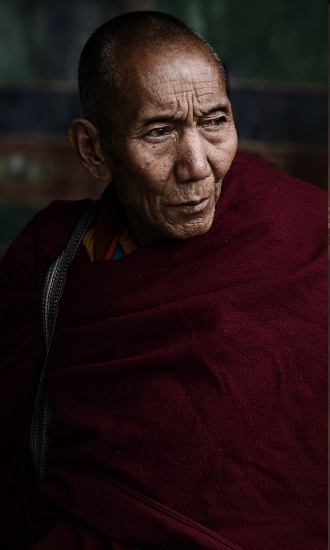
According to the travelers on his bench, the secret was not stocks, bonds, or currencies.
It was an object. A braided band of copper that the valley calls the Tibetan Bracelet of Fortune.
How a blamed widow who carried water before dawn became the grandmother they call Lucky Aunt
Until a few seasons ago, only the small villages of that valley had seen the turning done. Drolma's was the first performed for an ordinary woman.
The story every child up there gets told: Drolma was widowed young, and her village blamed her, the way villages blame widows. Every closed door, every hard winter found its way to her name. The family's winter debt sat on the household like weather that would not break.
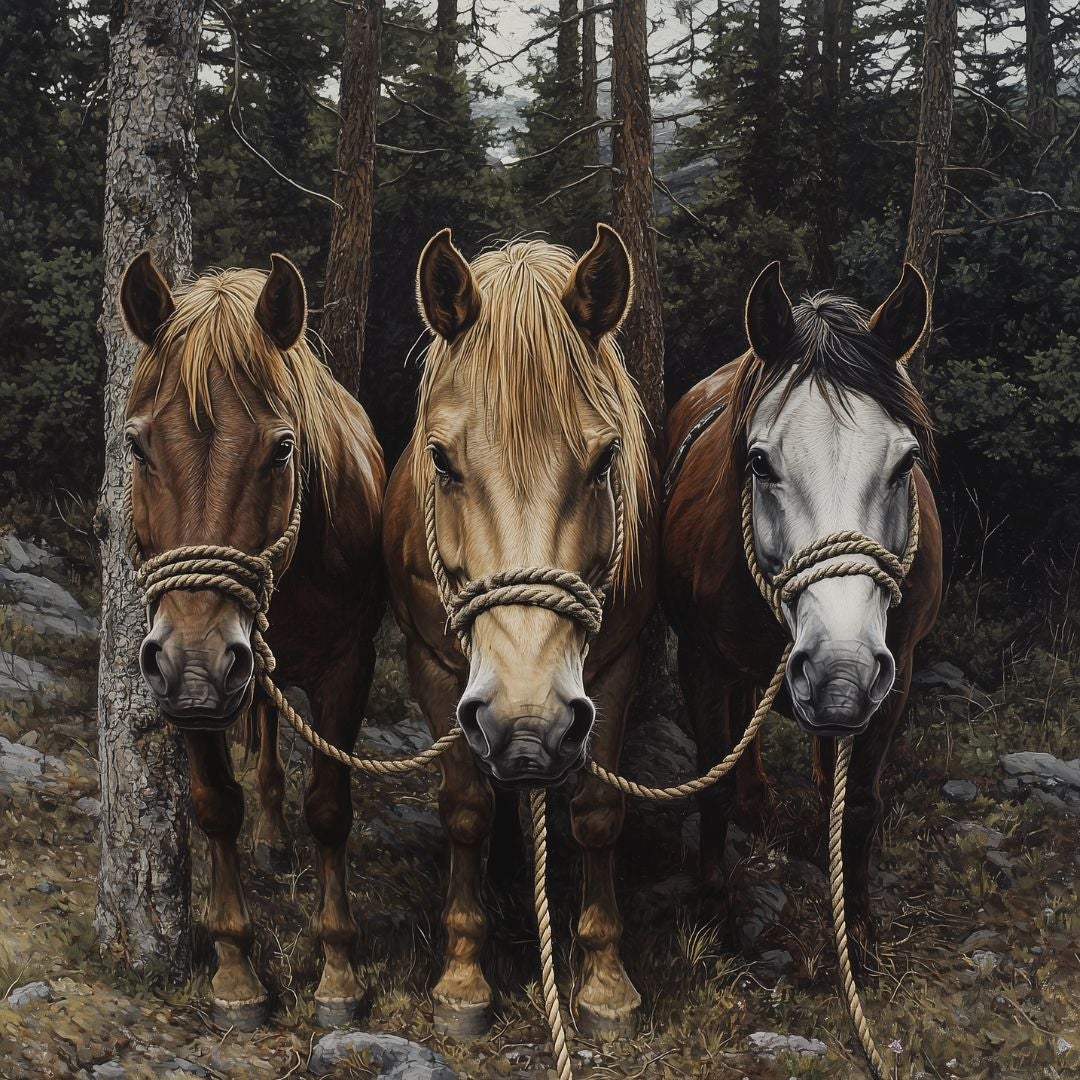
What she carried up the monastery path before dawn was water. Two pails, every morning, frost on the stones. Not penance, she said.
The old abbot watched her pass, season after season. Then one morning he did something the valley had never seen. He took the cracked copper band from the offering bell, worn thin at the strike, and had it braided onto a cord.
For 28 nights the monastery recited over it. 108 verses a night. The whole weight of one woman's life, read aloud.
Then he tied it on her wrist himself and said:
"The debt is not erased, daughter. It is turned."
That same season, the grain merchant forgave the family's winter debt. A nephew in the low country left her his two fields. The village that had blamed her began calling her Lucky Aunt, and her granddaughter's dowry debt quietly vanished into the same soft season.
Nothing rained from the sky. The fortune had been Drolma's all along, reading out in the wrong direction. The recitation and the copper turned it, and what had been taking from her began paying her instead.
The valley's own records give a clue that the bracelet really works
Ask Agnes about the letters: the monastery keeps a shelf of old turnings, and the turnings repeat themselves. Among the ones she told me of:
A widow on a tiny pension, at her wit's end, was given a copper band by a passing trader. Within the season: an overcharge repaid from four years back, a legacy from a cousin overseas, and a winter's coal paid ahead by a neighbor who left no name.
A market gardener facing his third failed summer found a "shining loop" turned up by his spade. That harvest, a hotel owner bought his entire stock at twice the asking price.
A retired postwoman, alone after forty years sorting other people's good news, tied a copper band at her pulse. Within the month, the quiet widower two doors down asked her to help with his roses. They were married under his apple tree the following spring.
Coincidence? A sensible reader smiles at such tales. I did.
The travelers, who had built fortunes noticing patterns, heard those tales a different way.
Every one turns on the same hinge: an ordinary woman at the end of her rope, and a copper band arriving exactly there.
One of the founders said it on the bench. "Coincidence does not repeat itself this neatly. Something is keeping count."
The plainer reason they had come: Agnes's post confirms he is one of the last alive who can perform the turning.
The old teaching that explains why a band of copper can turn a fortune around
When the travelers asked about the bracelet, he refused. He talked about something else, the way old teachers do when they want you to grow up.
The word they all thought they already knew. Karma.
Nearly everything you were told about it is wrong.
The old teaching says three things. What a woman does follows her like a scent in a coat. What is left undone waits like a tool in the rain. And what her family left unfinished sits on her, the way a cottage comes with its roof already leaking.
Under it all sits one hard fact, and it is your life. What is owed does not sit still. It feeds the way a mouse feeds in a flour bin: never the whole sack at once, a little every night, so the sack still looks full.
Where does a debt like that come from? Partly down with the family, the way the cottage came: a wrong from a hard winter two generations back, left behind by hands you never met. Partly a woman writes it herself, not knowing: a hard year's sharp words at a kitchen table. It is not a judge. It is a creditor: it waits, and it charges for the waiting. Waiting is not free. It is the one arrangement where the interest works every night, in a quiet house, and the one waiting is the one who pays.
The old teachers had a word for the feeding, taken from a woman's kitchen: karmic debt. Not a curse. A debt, and a debt can be dealt with. And nothing in the old teaching says a debt expires. That mercy was added later, by people who needed the rhyme to end well.
"Now read your own year the way I read a debt," he told them, and the room went very quiet.
The refund that turned into an error. The win one number short. The door that shut as your hand came up. Not separate misfortunes. One standing debt, repeating one behavior, intercepting whatever flows toward the woman it sits on.
The debt has a lifetime, he said: whispers, a rough patch, the coping years. Then the crossing. A debt compounds, season on season, while the years left to outwait it shrink. Somewhere in the fifties and sixties the two lines meet: a debt a woman might once have outlived becomes one that outlives her unless something turns it. Not her age working against her. Arithmetic, arriving.
He has heard what comes next in every valley the teaching has reached, half to the floor: oh. So that is what has been happening to me.
"But we were good," one of the seventeen said. "We prayed. We stayed kind. Why did none of it land?"
"All of it landed," Lobsang said. "The praying was real. The staying kind was real. But a kindness is a seed for tomorrow, and no seed pays what is already owed. None of it was wasted. It is stored, the way grain is stored in her own granary. But grain in the granary does not pay what sits under the floorboards. Her goodness never failed her. It was never aimed at the debt."
The cards he saved for last. "A card reader sees the weather over a house. She cannot see the debt under its floorboards. And a charm is a key cut for another woman's door."
One of the travelers asked the question you are asking. His mother had been the kindest woman in her county for eighty years, and her last years were her lightest. No bracelet. Why?
"Because her debt was nearly paid," Lobsang said. "Some burn down at the end. Yours has not begun to. And what clears by chance, the mouse finds again by winter."
Then he told them the order, and why it is the order.
First the small releases, because the Turning takes the newest first, the debts a woman wrote herself. That is why the first releases are small. The overcharge, the forgotten debt, the bill someone else quietly settles. Margaret, 71, watched six years of mischarged fees come back as one brown-envelope refund of £4,261 in her third week.
The first refund is not the fortune. It is the proof the reading has changed.
Then the older stones move, around the fifth or sixth week: debts that sit deeper, some written before she was born. That is why legacies and old debts surface then, out of nowhere, because nowhere is where they wait. Margaret's legacy of £9,417 arrived in her sixth, from a patient she had shared one winter of hospital waiting rooms, twenty years before. All they had ever shared was biscuits.
Then the lightness, and mark the why. The interest was never only money. It fed longest on the counting itself, the tally in a woman's head. Turn the debt and the feeding stops at its source. That is why the counting stops, and why she cannot name the day it stopped. Sleep that goes all the way down. Appetite for your own life. Company at the table. Eleanor, 66, alone since her husband passed, was asked to tea by the quiet widower from the allotment, and they walk the canal path now. Ruth, 74, says the dread that used to sit with her from two until dawn simply stopped coming. She is back among her roses.
That is the order it came for me. Twelve days after I tied the knots, £318 of mischarged heating came back. By day 40, a tax recheck and a solicitor had brought £1,414 and £2,050 more, the last from money my late sister left in my name. I would have handed every penny back for one more of her phone calls. I think she sent it anyway.
And the small fortunes. My daughter telephones on ordinary evenings now. My son-in-law asks my advice about the garden and takes it. I bought the good teabags again.
Long before the soldiers came, the abbot of that valley kept count of everything: harvests, dowries, debts. The valley could not read and the monks could, and he taught that heaven keeps count of the same kind.
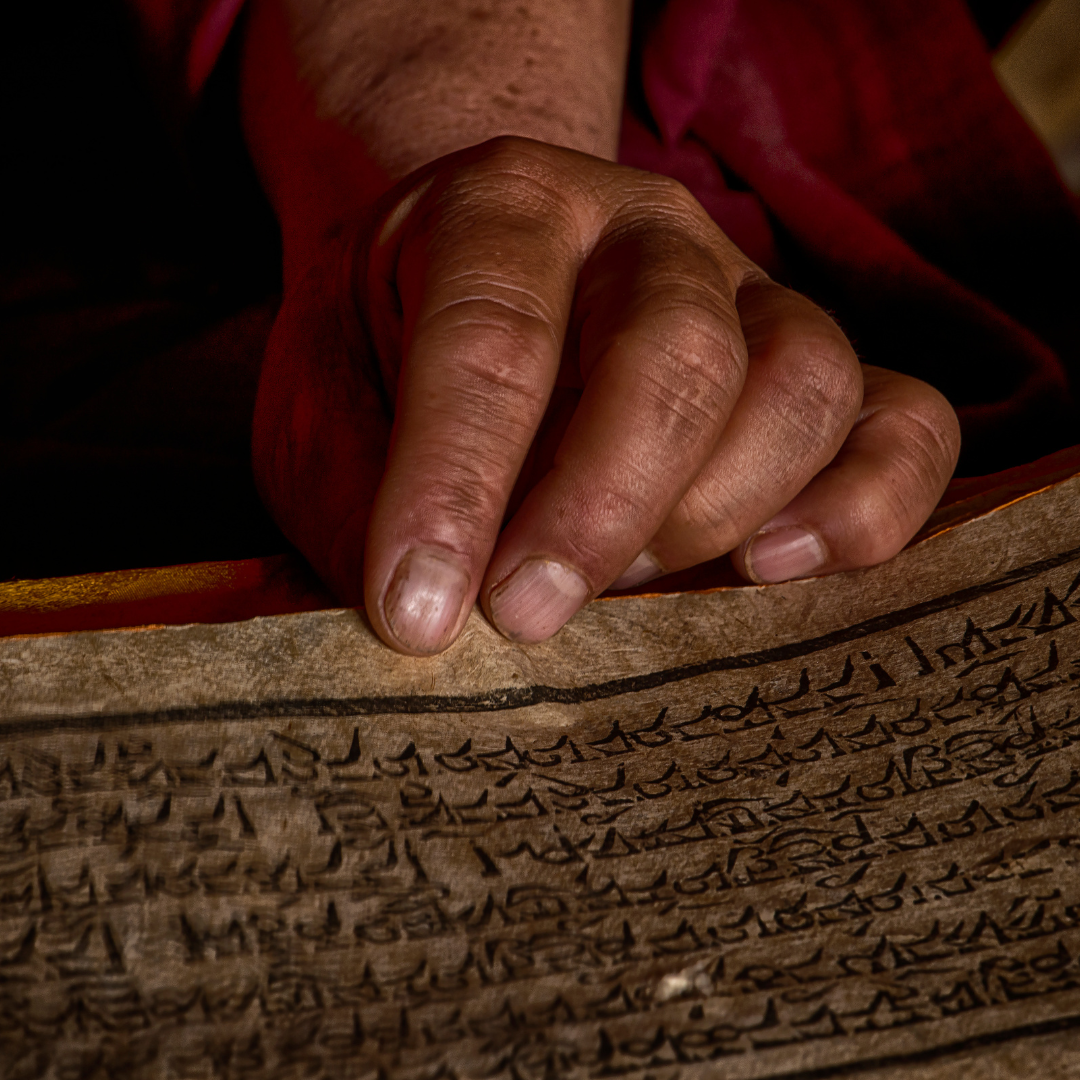
Then came the soldiers. They burned what was written. What was spoken, they could not burn. What went over the high passes was the teaching itself, verse by verse, hidden in the cracks between the prayers. Teacher to student. Seven generations. And when there were walls again, the lineage re-forged it as a band of copper, drawn from the seam below the valley, spoken over, and tied at the pulse of one named woman.
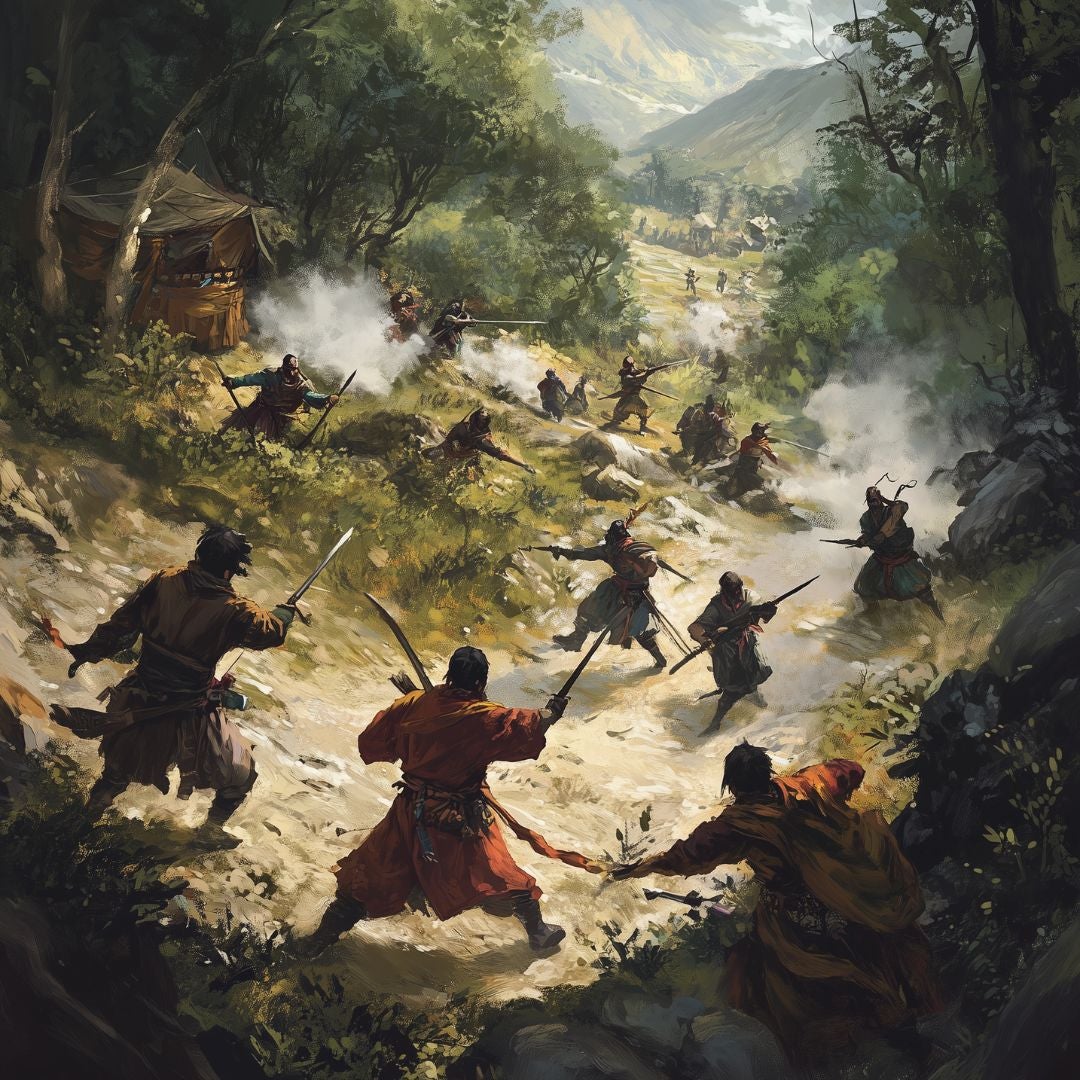
Lobsang is the 34th holder. The lineage counts its teachers the way you count spoons. Carefully, because spoons get lost.
The material that carries the turning? It is not what you expect
Agnes says when the travelers got him onto the subject he pushed back his sleeve.
On the old man's wrist sat a band that caught the mountain light like something golden. He let them hold it. Copper. A few coins' worth, darkened. The plainest metal in any drawer.
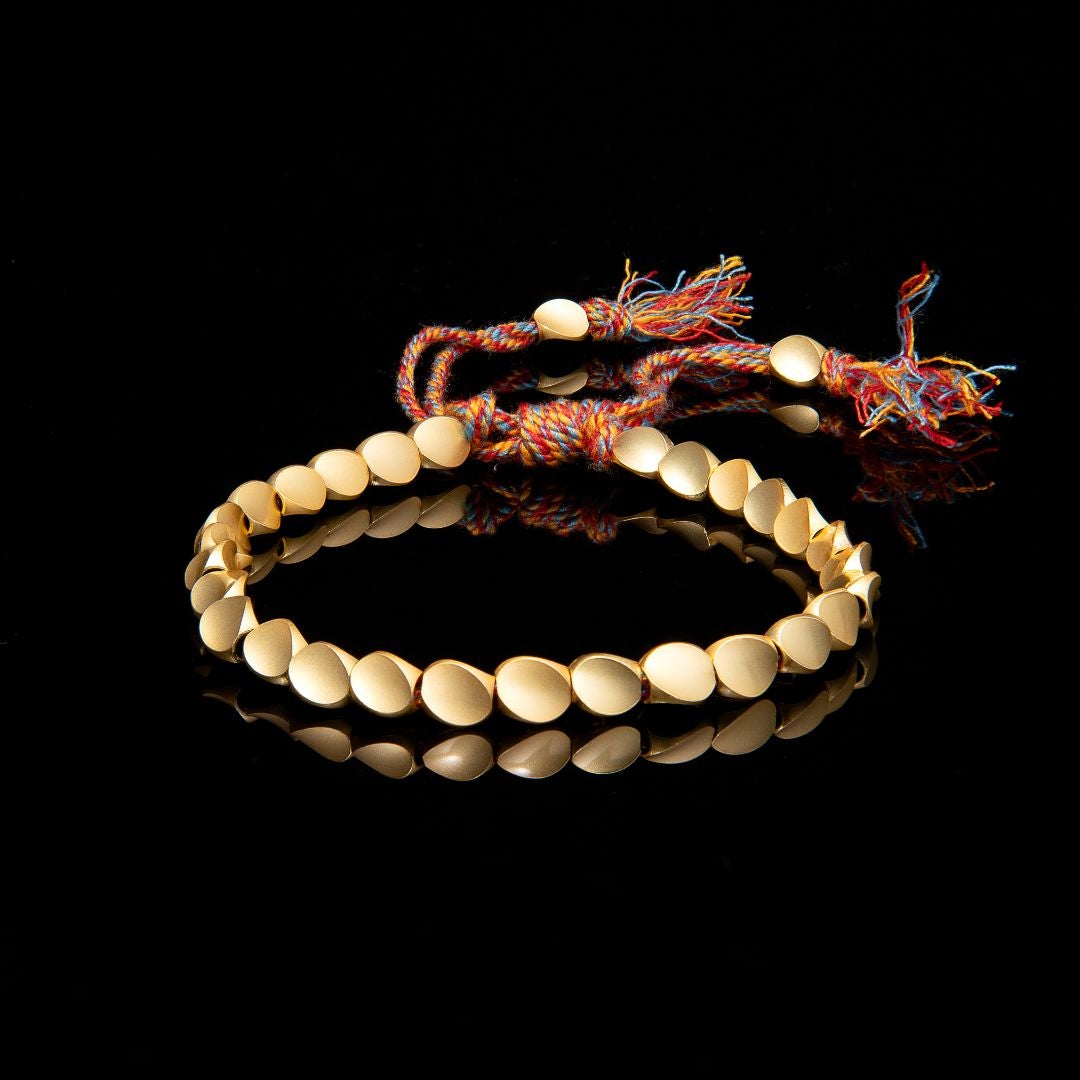
The travelers passed it round in silence. One of them laughed.
"Listen carefully," Lobsang said. "In your world, copper carries a voice down a wire, one end to the other, nothing added, nothing lost."
It was one of the seventeen who asked the sensible thing. "You know her name," he said to Lobsang. "Why not speak her clean from where you sit?"
"Because her debt is not loose in the air over her house," Lobsang said. "It sits on a named woman, and it sits at the pulse, where her current runs nearest the skin. So the release is tied where the debt sits. And hear this: my voice ends when the last verse ends. A debt works every night after. Copper carries a voice without adding a word or losing one. The band is the verse that does not stop."
Which means the creditor stops finding your door.
"Understand this part," he said. "The bracelet does not make you lucky. Nothing can make you lucky. It releases what was always written for you and was being held back. That is all it has ever done. It is enough."
Not everyone is given a Tibetan Bracelet of Fortune
A band in every palm would be a tidy ending. That is not what happened.
Agnes says he met each of the seventeen alone. One by one, coming out, the richest people in the world looked smaller.
Because he was not weighing their wallets. He could see what each of them owed.
The founder who had closed two factories in a week to look decisive. The landowner who had evicted a widow of 81 over a fence line and won. The fund manager whose fees were quietly emptying pension pots that belonged to school cooks and bus drivers.
Everybody looked at their shoes.
Except one.
At the end of the row stood a woman named Edith, who looked neither defiant nor ashamed. She had inherited money she never expected, and had spent thirty years paying other women's heating debts, anonymously, across her county.
Lobsang tied the band on her wrist himself.
"This is not for your gain," he told her. "You have spent your years carrying everyone else's cold ones. Let this carry yours."
Agnes says Edith cried, and that the knot he tied was loose. The way you tie something meant to be given on.
Thanks to Edith, the Tibetan Bracelet of Fortune is finally within reach of the rest of us
On her way down, Edith stopped at Agnes's post window and asked the question nobody had asked: why should the turning belong only to women who can afford to climb?
With the lineage's blessing, Edith paid for the little website, and Agnes runs it, because monks and money do not mix. The monastery takes none of it. The small contribution goes where you would want it: the copper, the candles, the butter lamps, and the craftsmen's winter.
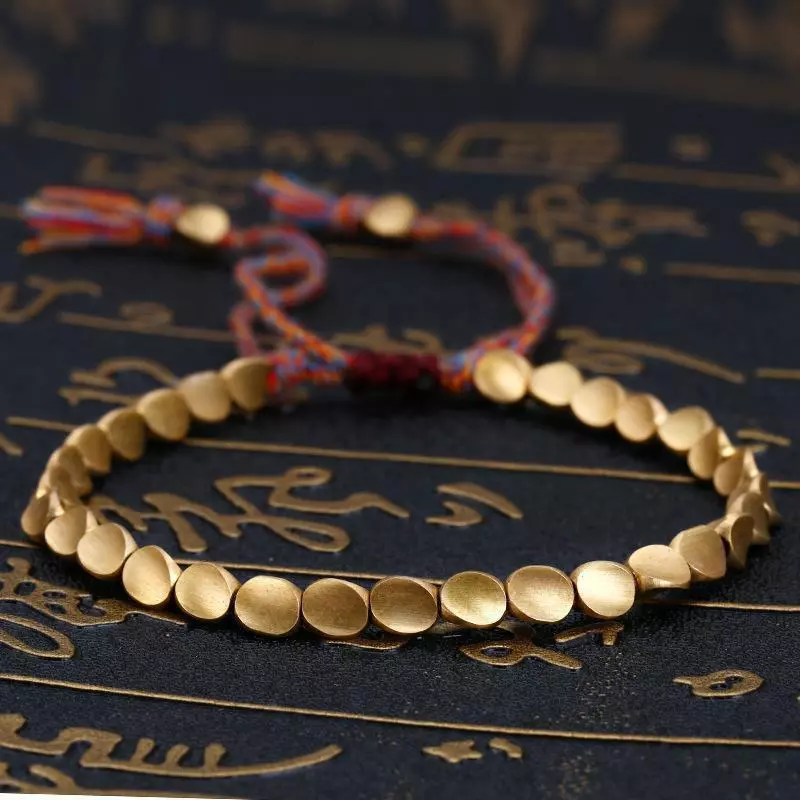
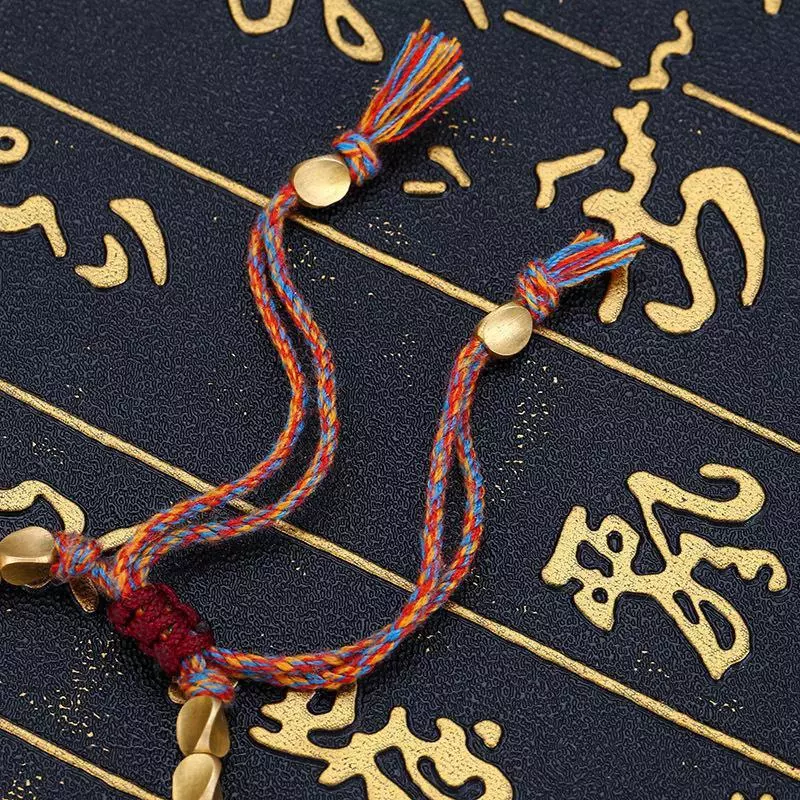
Each bracelet begins as copper drawn from the seam below the valley. Three craftsmen braid it, only when the monastery can spare the candlelight. Then it is carried up, and for 28 nights the recitation the lineage calls the Turning is spoken over it. 108 verses a night. Nothing is invented. Nothing is erased: what was taken is turned into returned, and what was owed into paid.
Nothing on the band is decoration. A karmic debt is a round: what went around, coming around, the rhyme every grandmother knows. The old teachers did not argue with the rhyme. They answered it with a circle: the same round, closed, tied at the pulse, and held so it turns the other way. The cord is braided from three strands: what was taken from you, what you were never given, and what you gave away free at your own table. Braided, no strand can slip loose before its turn. It leaves the mountain unfinished. The last three knots are tied by your own hand, because a debt is only loosened by the hand that wants it loose.
Honest work, Lobsang says. Nothing more exacting.
And in a kitchen like yours? "Like weather clearing in patches," he told me. "An envelope on the mat that was owed to you. The first envelope in years that is a RETURN, not a demand, and the moment she knows the reading has changed. A gate that never once opened, opening. And one morning the counting stops in her head, and she cannot name the day it stopped, because the debt is gone."
Edith asked for one rule, and got a rule and a warning.
"Do not ask it for greed. Ask it for peace. Greedy hands tie the knots too tight, and the turning slips them."
The warning was for the drawer: some women feel the first releases, decide the work is done, and lay the band aside while the deep debt waits. Off the wrist, the old pattern creeps back. The mouse comes back to any bin left open.
Over 9,000 bracelets already sent down the mountain?
Agnes's count passed nine thousand names a few seasons back. Nine thousand linen pouches, carried down to women mostly past sixty, most of them on pensions, every one named, each one read aloud verse by verse.
A television crew climbed up last season to film the recitation. Lobsang sent them down with tea and no footage.
The site Agnes keeps carries more than a thousand thank-you letters, and Lobsang will not let her throw one away: gratitude is also a verse. Here are three, printed with permission.
"The knots have been tied six weeks. The kitchen door still sticks, and everything else has moved. A debt I had forgotten I was owed came back with the papers to prove it. My granddaughter says I hum when I cook now."
"I did not write for a month because I told myself it was coincidence. Then the quiet man from the boats asked me to sit with him at the harvest fair. I am 79. Nobody has asked me in years, and I will leave it there."
"I asked for peace, not money, and peace came first. The money part takes one line: the council reread my meter for the first time in nine years, and I am £471 to the good."
A small refund in Maureen's first weeks, an old debt home with its papers in Peggy's sixth, a quiet man for Miriam: one mechanism, seen working.
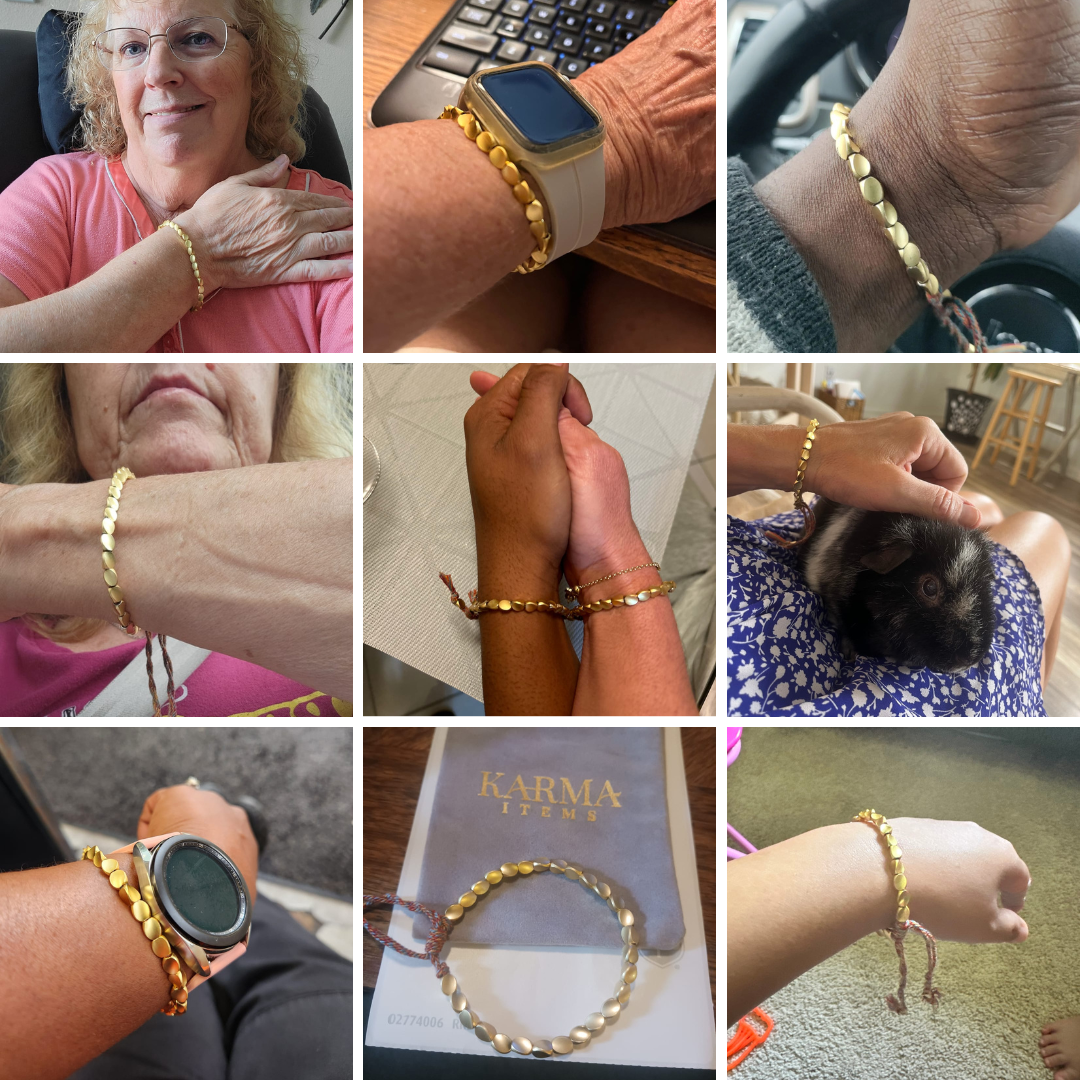
Where can you get one?
Agnes's site is the only place the bracelets are spoken over and sent out. No shelf in any shop. Yours will not exist until you ask.
- You say yes on Agnes's site, and give the name the recitation is spoken over. Yours. Or yours and one more, if there is a hand you worry about. The Turning is spoken over a name, and the recitation cannot take its first verse until Agnes has yours in her hand. Nothing begins without it.
- At the next dark of the moon, the monks begin your 28 nights. When the Turning is finished, your bracelet comes down in a linen pouch with its cord and a note card, and you tie the three knots yourself, one wish each morning for seven mornings.
Take two, one to wear and one to tie on with your own hands, a daughter, a sister, the friend who checks your step in icy weather. The second comes at a gentler rate, because the person you lie awake about should not be left carrying an open debt of her own.
The monastery's word: a prudent woman should never be asked to gamble her pension on a promise, so the terms are the monks' own. Wear your bracelet for 90 days. If you do not feel the turning take hold, write one line to Agnes and every penny comes back. No forms. No questions. No shame. The monks insisted on the clause themselves. Their words: a blessing you must fight for is no blessing.
If you want to check whether this turning still has room for one more name, and Agnes's site is still open, look here >>
It is also a lovely thing on the wrist, braided copper that takes the light like an old penny. Do not be surprised when the neighbors ask about it.
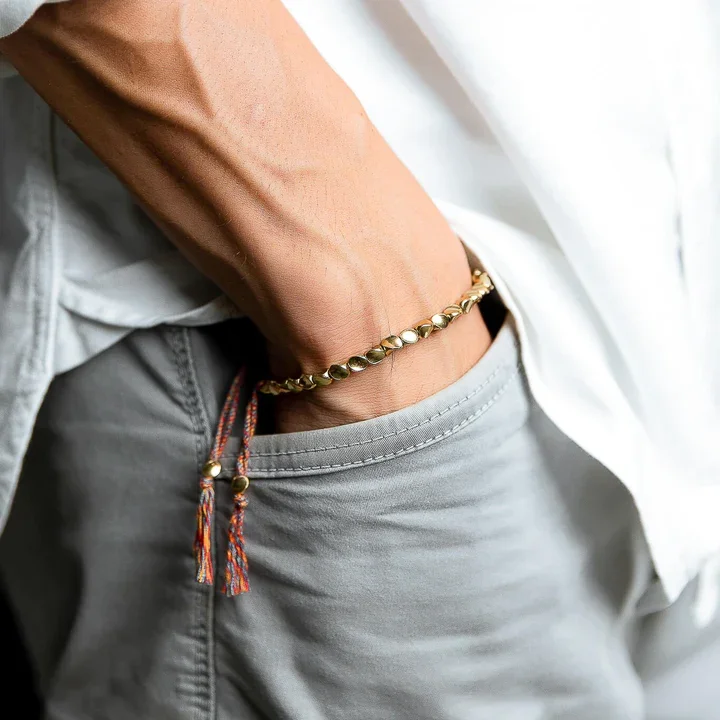
Copper goes dark against the skin. The old teachers say that is the work you can see: it is taking the dark with it.